
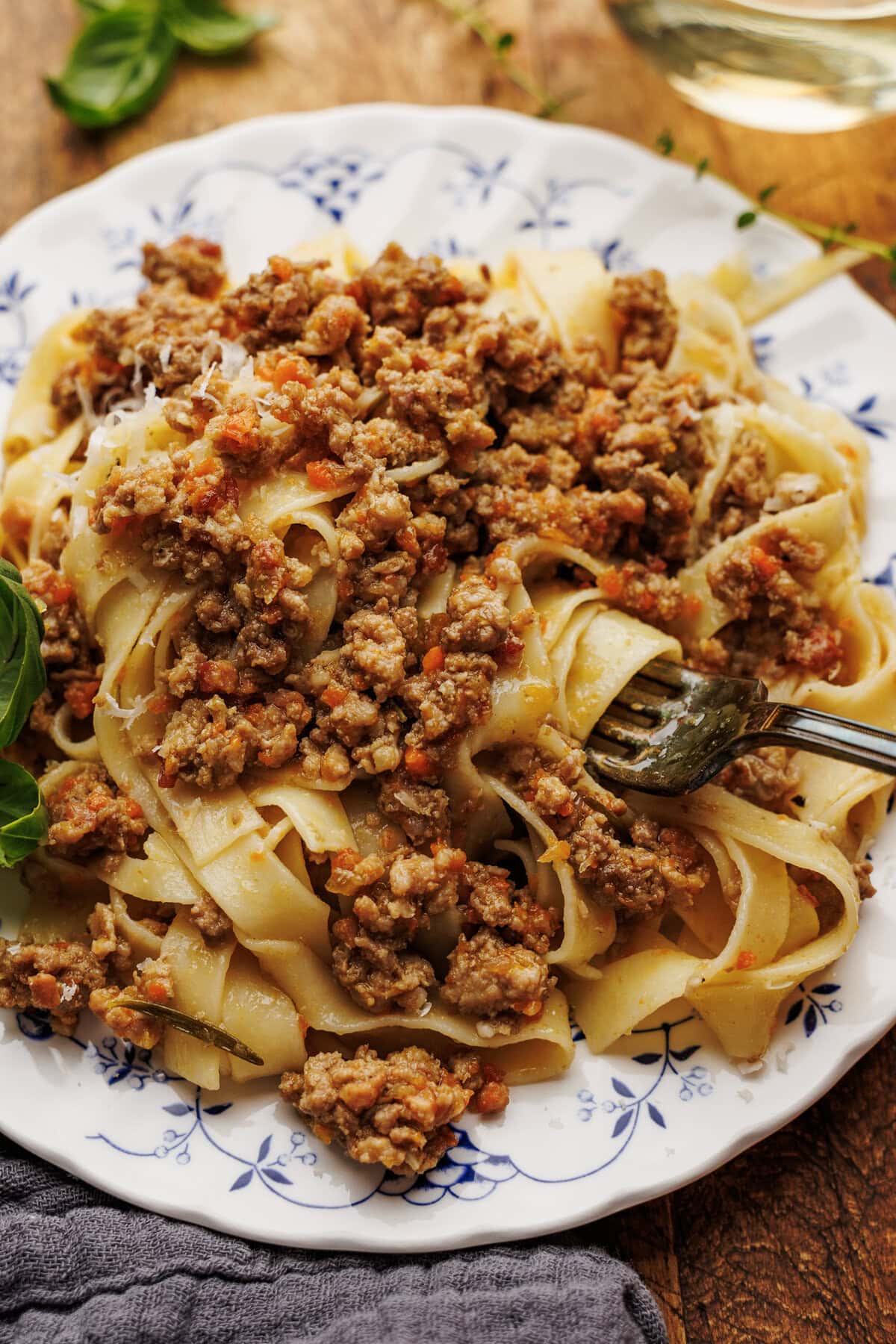
White bolognese (also known as Ragu Bianco) is just like a classic Ragu alla Bolognese, but without the tomatoes! This Northern Italian ragu is made of a trio of meats, white wine, and a classic Italian soffritto. This sauce is delicate yet robust in flavor and pairs perfectly with ribbon-shaped tagliatelle pasta and lots of Parmigiano Reggiano!
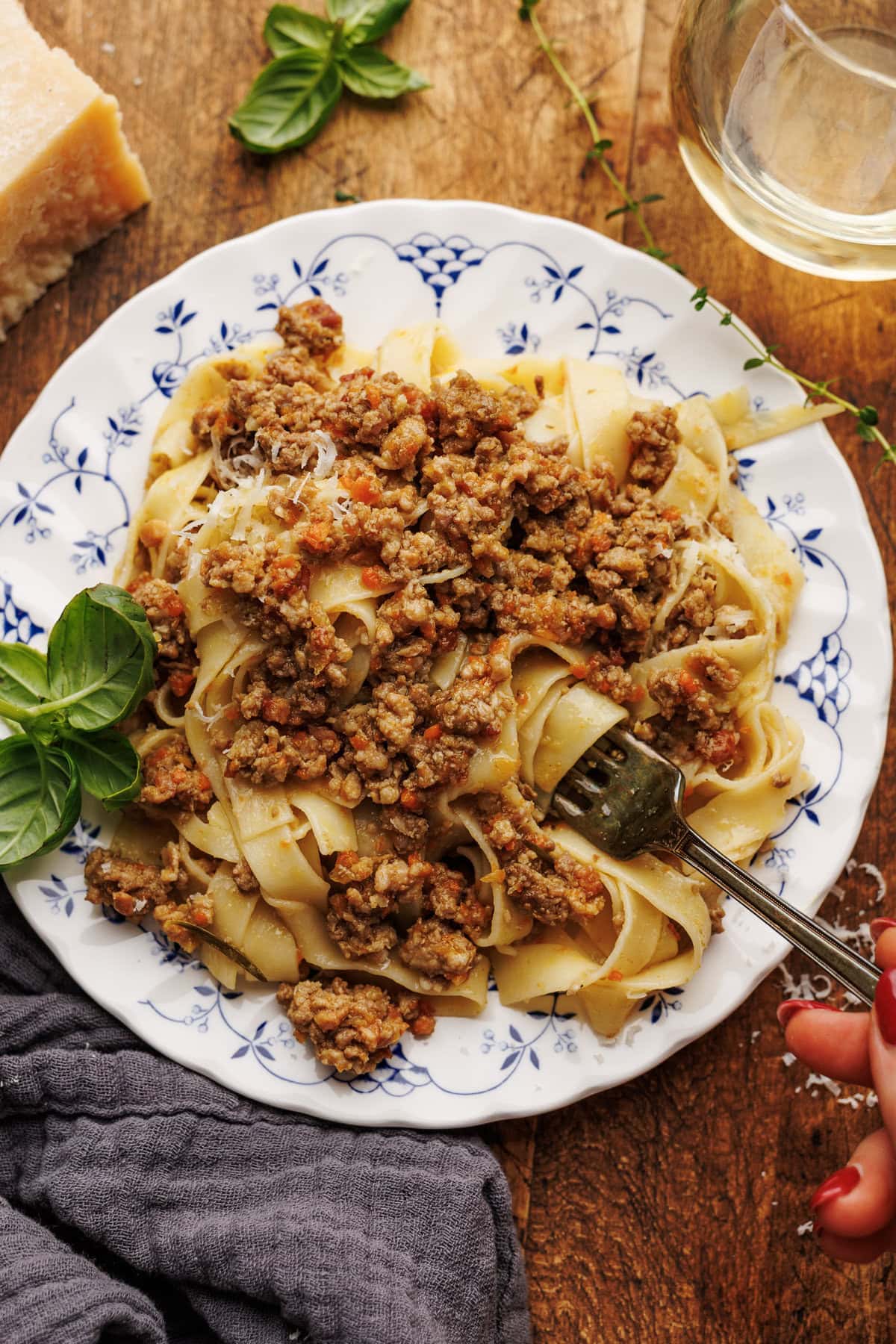
Bolognese has always been one of my favorite foods, but I’ve only ever had it with tomatoes. Until I learned about ragu Bianco, the famous white Bolognese. While I think a classic Italian red sauce is hard to beat, ragu bianco actually came before the tomato-based meat sauce in Italy. It was, in fact, the original way to make a true Italian meat sauce!
The first time I tried this, I was so impressed by the flavor that I didn’t miss the tomatoes at all. It’s delicate yet robust in flavor, making it a standout pasta dish! I love serving this with a wide pasta such as tagliatelle or pappardelle, but you can also layer this into lasagnas, baked ziti, or even stuffed shells. No matter how you serve it, it is absolutely delicious!!
One of the key things about any traditional ragu is that the ingredients are not to be too overpowering. There is much beauty and much flavor to be had in the simplicity of ragu bianco. I kept this recipe pretty traditional while adding a little garlic (not typically used in this sauce), but you can leave it out if you want to be a true purist!
Ingredients
View recipe card for ingredients and video tutorialThe soffritto. This is the foundation of flavor in most ragus, and it refers to a medley of vegetables: carrot, celery, and onion. I used a red onion for flavor and color but you can also use yellow or red. While garlic is not traditional in bolognese, I like to add it to the soffritto for added flavor.
The meat. A trio of meats is used: pancetta for a rich, savory pork flavor, then pork and beef for the main mince.
Liquids. Since this recipe doesn’t require tomatoes, we look to other ingredients for the liquid. We’ll use a cup of dry white wine (I recommend Pinot Grigio) and chicken or beef stock. Water is often used in bolognese, but I think stock is a better choice because we’ll need its flavor, since we’re relying on only a few ingredients in this ragu.
Flavorings. Bolognese flavorings are kept very simple. The wine (mentioned above) is a major source of flavor, but we’ll also use a fresh rosemary sprig, a Parmigiano Reggiano rind (the outer shell in which Parmesan cheese is aged), nutmeg, salt, and pepper.
How to Make White Bolognese
-
1
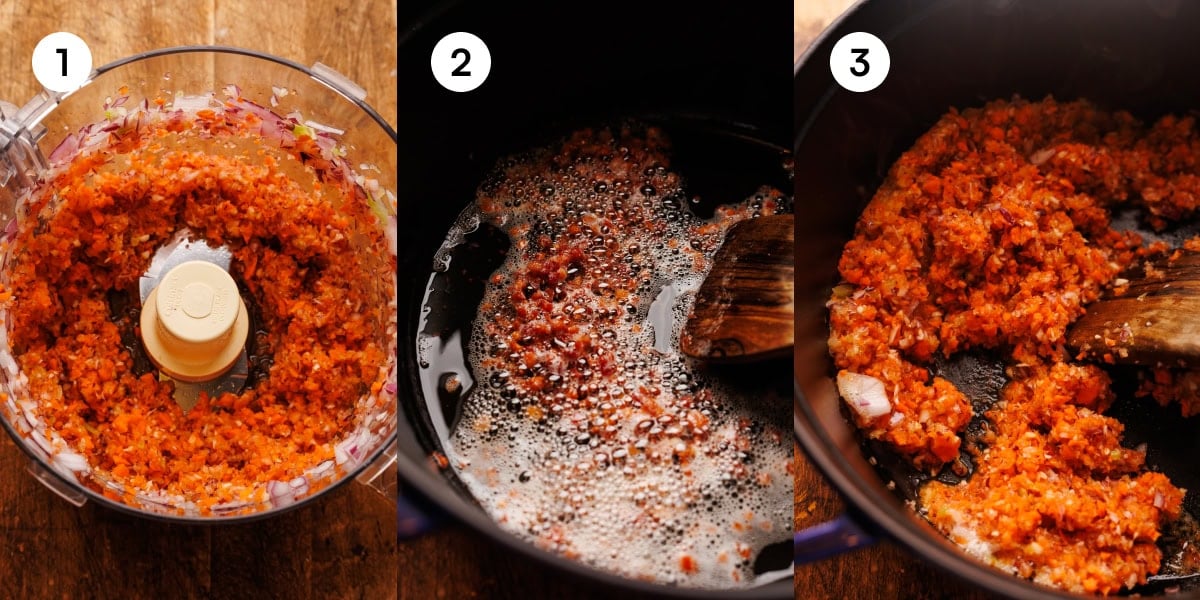
Chop the soffritto. Roughly cut the onion, celery, and carrot, and place them along with the peeled garlic cloves in a food processor. Pulse until the vegetables are chopped nice and small. Be careful not to over chop them, we don’t want this to become a puree.
-
2
Brown the pancetta. In a large pot or dutch oven, brown the pancetta with 2 Tablespoons of oil for 3-4 minutes. Stirring constantly to prevent it from burning.
-
3
Sauté the soffritto. Once the pancetta is browned, add the diced vegetables (also known as the soffritto). Sprinkle with a healthy pinch of salt and cook until soft (about 3 minutes).
-
4
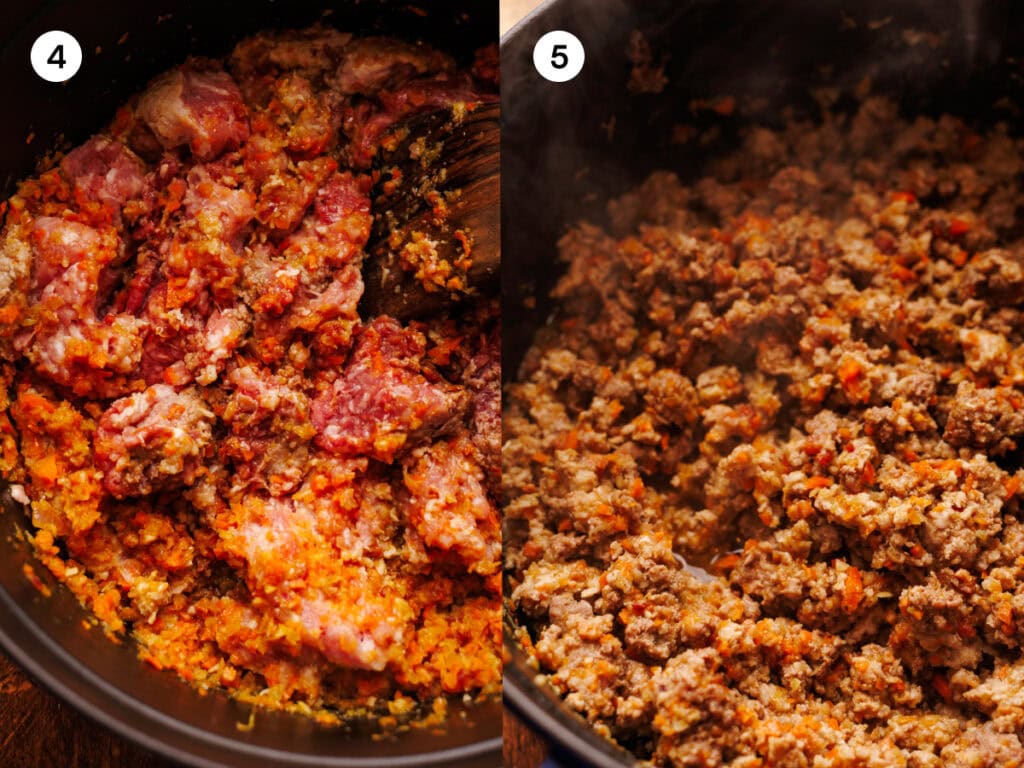
Cook the meat. After the soffritto has softened, add the ground pork and beef with a generous pinch of salt and use a spoon to break the meat up into smaller pieces. Cook until the meat is no longer pink – about 5-7 minutes.
-
5
Add the wine. Then add 1 cup of white wine to the meat, and cook for several minutes.
-
6
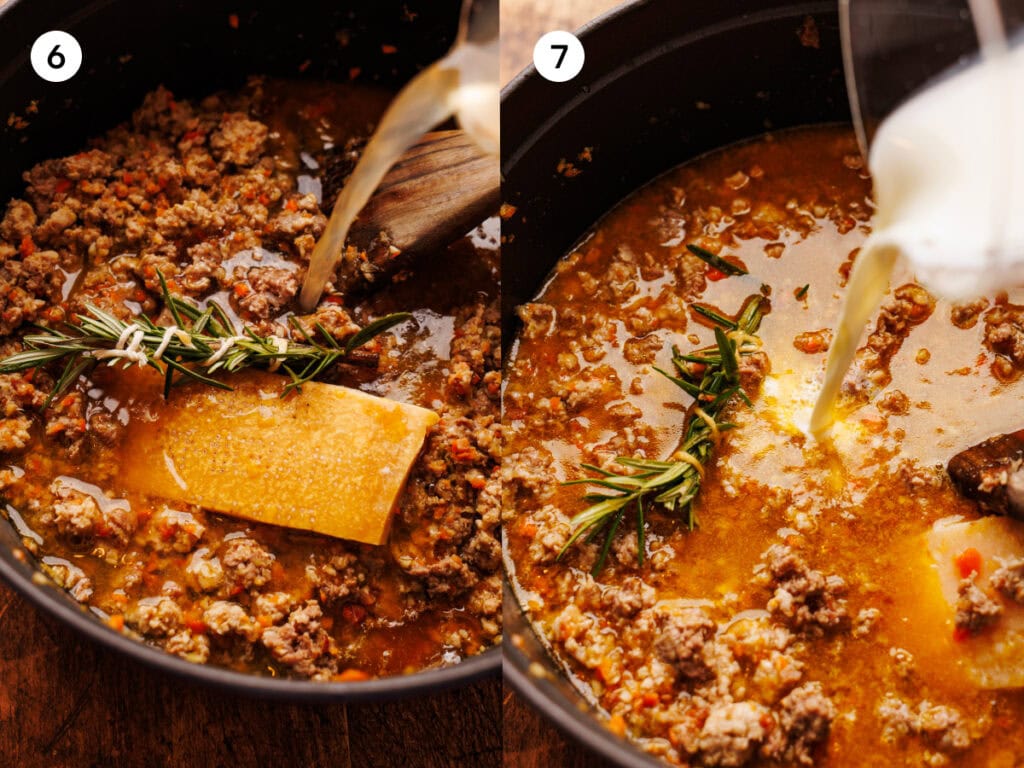
Add the stock, rosemary, and parm rind. Then add the beef stock, rosemary sprig, parmigiano rind, and nutmeg.
-
7
Add part of the milk and simmer. Then add 1/2 cup of milk, then season with a pinch of salt and pepper. Partially cover the pot and put the heat on low for 1 1/2 hours, stirring occasionally. Then remove the lid, add the remaining 1/4 cup of milk, and let it cook uncovered for 20-30 minutes while you prepare the pasta.
Tips for Success
Always reserve more pasta water than you need. Pasta water is an essential ingredient in many of my dishes, especially in bolognese. This salty, starchy water adds creaminess and hydration to the sauce and pasta. I always save more than I need in case the dish dries out after I’ve served it and needs reheating and rehydration.
Keep the vegetable cuts small. Because this recipe uses both minced meat and vegetables, it’s important that everything is cut to the same size so they blend cohesively together. This is especially important when it comes to the soffritto (carrot, celery, and onion). My favorite way to cut them is using a food processor, but you can also use a chef’s knife. If you’re cutting the vegetables by hand, be sure the cuts are no bigger than the minced meat.
The best way to use herbs in a ragu. Instead of adding whole-herb pieces to this sauce, I like to use rosemary sprigs or dried herbs in a vessel, such as a tea bag, or wrapping the whole sprig with kitchen twine. This helps infuse the herbs’ flavor into the sauce without adding actual herbs to it. I recommend using a teabag especially if you only have dried rosemary on hand.
Skim off excess oils while it cooks. To prevent the sauce from being overly oily, I like to use a spoon to skim off the oil that rises to the surface as the bolognese cooks. I discard this in a can or jar.
Serving with herbs is optional. I love serving any pasta dish with an abundance of fresh basil or parsley, but bolognese generally isn’t served with any herbs at the end because, in all honesty, it doesn’t need them. It’s just that good of a sauce. However, you are more than welcome to serve this with freshly chopped basil for a touch of bright, herbed flavor!
What to Serve it with
Pasta. This sauce shines when served with a wide, ribbon-shaped pasta that really helps hold the sauce. Traditionally, this is served with tagliatelle or pappardelle! Spaghetti and angel hair are too thin, and the sauce will slide off them, making them hard to enjoy with this sauce.
Salad. Alongside this, I like to serve a fresh salad on the side!
Bread. If you have a crowd to feed, a crusty bread goes great with any pasta dish! We love our rosemary garlic bread for a quick homemade bread or homemade country sourdough!

White Bolognese (Ragu Bianco)
Video Tutorial

Ingredients
- 2 Tablespoons olive oil
- 1 medium/large red or yellow onion
- 1 large carrot
- 1 large celery rib
- 5 garlic cloves
- 4 oz diced pancetta
- 1 lb ground beef
- 1 lb ground pork
- 3/4 cup dry white wine, I used Pinot Grigio
- 2 cups beef stock or chicken stock
- 1 large Parmesan rind
- 3/4 cup whole milk, divided
- 2 rosemary sprigs, tied with kitchen twine or placed in tea bag (see notes on this)
- 1 lb dried tagliatelle or pappardelle
- 1 1/2 cups pasta water
- salt & black pepper
- 1/8 teaspoon ground nutmeg
- 1/2 cup freshly grated Parmigiano Reggiano
Instructions
- Chop the soffritto. Roughly chop the carrot, celery, and onion and place them along with the peeled garlic cloves in a food processor. Pulse until they're finely chopped. If you don't have a food processor, you can dice the vegetables small, so they blend nicely with the ragu.
- Brown the pancetta. In a Dutch oven pot (I used a 5.5-quart), on medium-low heat, cook the diced pancetta in 2 Tablespoons of olive oil until browned.
- Cook the soffritto. Then add the chopped soffritto to the browned pancetta, with a healthy pinch of salt, and cook until the vegetables have softened (about 3 minutes).
- Add the pork and beef. Once the soffritto is soft, add the ground pork and beef with a generous pinch of salt. Use a wooden spoon to break the ground meat into small pieces as it cooks for about 5-7 minutes or until the meat is no longer pink.
- Add the wine. After the meat is cooked, add 1 cup of white wine and let that cook for several minutes with the meat.
- Stir in remaining ingredients and simmer. After the wine has cooked for a few minutes, add the rosemary sprig, chicken stock, 1/2 cup of whole milk, and ground nutmeg with a small pinch of salt and black pepper. Partially cover the pot, and let simmer on low for 1 1/2 hours, stirring occasionally. Then uncover the pot, stir in the remaining 1/4 cup of milk, and let the sauce cook for another 20-30 minutes while you prepare the pasta. Carefully remove and discard the rosemary and parmesan rind. Note: while the sauce cooks, I like to skim off the excess oils that rise to the top using a spoon or small ladle. This will help prevent the sauce from being overly greasy.
- Cook the pasta and reserve some pasta water. Bring a large pot of well-salted water to a boil, add the dried pasta, and stir it to prevent the pasta from sticking. Cook until it's al dente in texture. Before draining the pasta, reserve 1 1/2 cups of pasta water and set it aside.
- Toss the pasta and bolognese together. Drain the cooked pasta, then add it to a large saucepan or pot. Ladle in ragu sauce as needed, then a few tablespoons of pasta water, and freshly grated Parmigiano Reggiano. Keep the heat on low to melt the cheese, and toss everything together. Add more cheese and pasta water as needed until everything comes together. Serve right away, with more freshly grated Parmigiano Reggiano, and enjoy!
This was different from anything my husband and I have had before. We actually really enjoyed the flavor, though. There were some moments where I was beginning to doubt how the flavors would come together, but I decided to trust the process lol. I feel like the two biggest must-haves in this recipe were the white wine (I used sauvignon blanc because it’s what I had on hand) and tossing it with freshly shredded parmesan at the end. It’s difficult to describe the flavor, but it was reminiscent of like a light beef stroganoff. Oh, my only regret was not canting off some of the pork fat before adding the milk and chicken broth and so on in. Definitely going to do that next time, but otherwise, a really great recipe! I would make this again!
Incredible recipe! Strong depth of flavor I wasn’t expecting without the tomatoes but it really works. Thanks!
This was just ok. I went ahead and switched over to the tomato version at the end of the cooking time because it just needed… something? I do love the youtube channel and your content. I will most definitely try more of your recipes. Thank you.
Hi Nicole, I’m bummed to hear that. I really enjoyed this version personally, even though it doesn’t have tomatoes I felt like it held up with its flavor from the wine, parm rind, ect.. So I’m surprised you felt like it was missing something, but totally okay I know we all have different preferences! Hopefully the other recipes you try you enjoy!